In our instant-gratification world, watching a child slowly, methodically place each embroidery stitch or carefully layer colors in a traditional painting feels almost revolutionary. While digital entertainment provides immediate rewards and constant stimulation, slow crafts teach something increasingly rare and valuable: the deep satisfaction that comes from patient, sustained effort toward a meaningful goal.
Understanding the Value of Slow
"Slow" has become a powerful concept across many areas of life – slow food, slow living, slow fashion. In children's activities, slow crafts represent a counterbalance to the rapid pace of modern life, offering opportunities for deep engagement, mindful practice, and the development of patience as a life skill.
Slow crafts aren't slow because they're boring or tedious – they're slow because they require attention, care, and the kind of sustained focus that builds character and competence. When children engage in activities that can't be rushed, they learn that some of life's most rewarding experiences require time, patience, and dedication.
The Neuroscience of Patient Practice
Building Executive Function
Research from Harvard Medical School shows that activities requiring sustained attention and delayed gratification strengthen the prefrontal cortex – the brain region responsible for executive function, emotional regulation, and long-term planning. When children work on detailed embroidery or traditional art projects that unfold over days or weeks, they're literally building brain capacity for patience and self-control.
Developing Frustration Tolerance
Slow crafts naturally present moments of difficulty, mistakes, and the need to backtrack or start over. These experiences, when properly supported, build frustration tolerance – the ability to persist through challenges without becoming overwhelmed or giving up. This skill transfers to academic work, social situations, and lifelong learning.
Creating Flow States
Psychologist Mihaly Csikszentmihalyi identified "flow" as the optimal experience where challenge and skill are perfectly balanced, creating deep engagement and intrinsic motivation. Slow crafts naturally create flow states because they require just enough challenge to maintain attention while remaining achievable with focused effort.
Traditional Arts as Patience Teachers
Embroidery: Meditation in Motion
Few activities teach patience as effectively as embroidery. Each stitch requires attention, precision, and commitment to a larger vision that emerges slowly over time. Children learn that beautiful results come from accumulated small efforts rather than dramatic breakthroughs.
Patience skills developed:
- Tolerance for repetitive, detailed work
- Ability to maintain focus over extended periods
- Understanding that quality requires time and care
- Acceptance of gradual progress toward long-term goals
Life skill applications:
- Academic projects requiring sustained effort
- Musical instrument practice and skill development
- Sports skills that develop through consistent practice
- Relationship building that requires time and attention
Starting with simple patterns and gradually progressing to complex designs teaches children that patience is a skill that can be developed, not just a personality trait some people have and others lack.
https://kalakaram.com/collections/buy-embroidery-kits
Traditional Indian Art: Cultural Patience
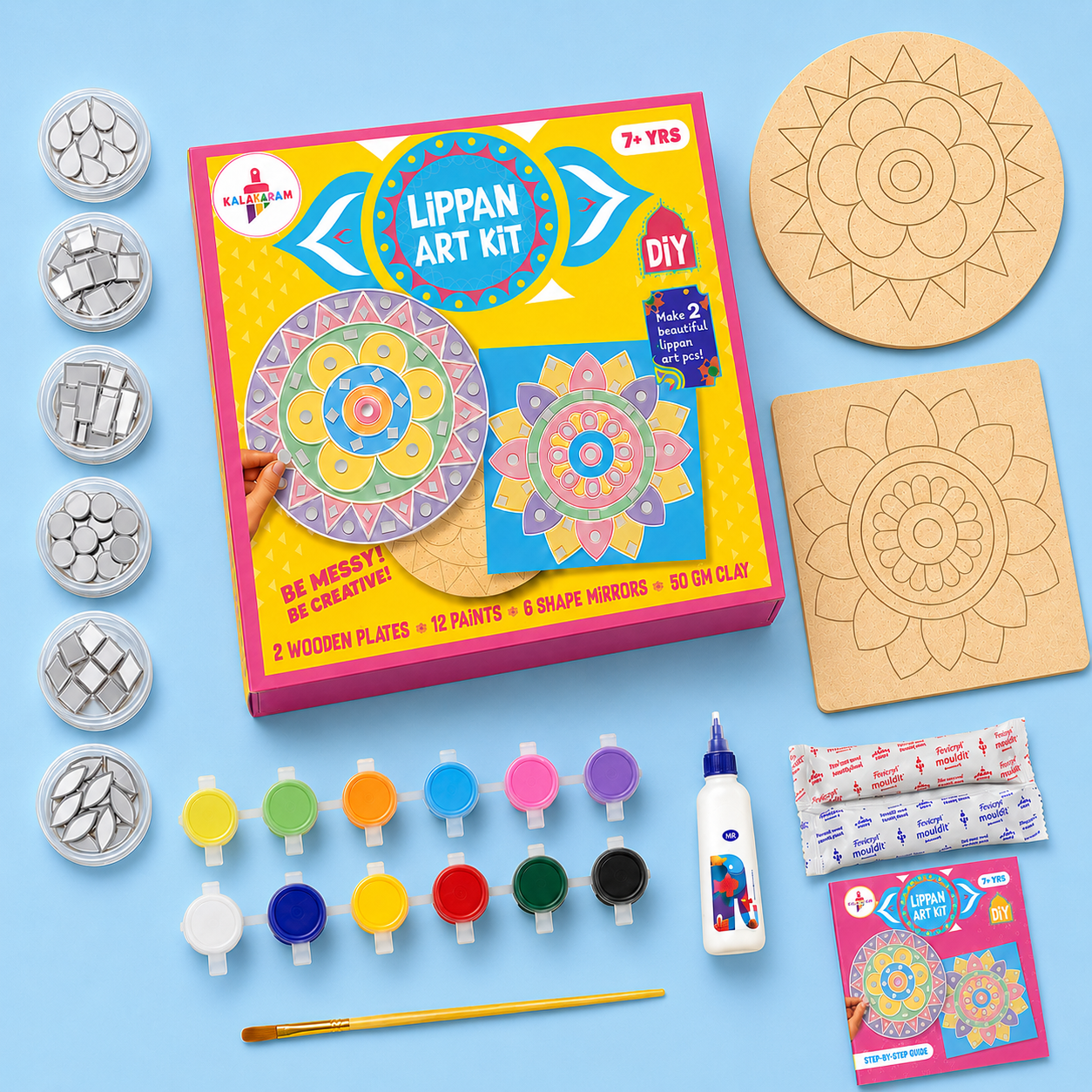
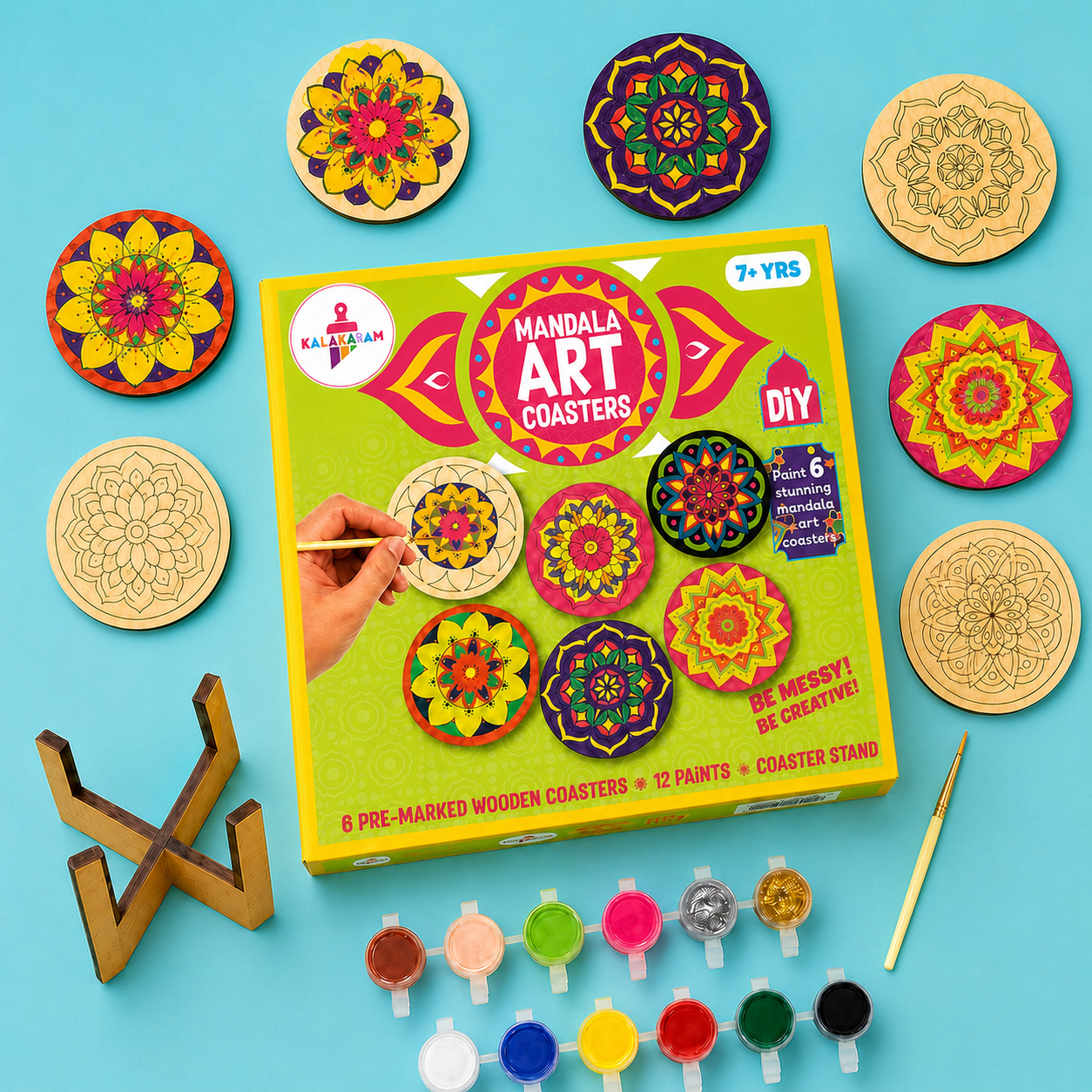
Indian art forms like Madhubani, Warli, and Gond art have been refined over centuries, with techniques passed down through generations. When children engage with these traditions, they connect to cultural practices that value patience, precision, and respect for process over speed.
Patience skills developed:
- Respect for traditional methods and established practices
- Understanding that mastery requires time and dedicated practice
- Appreciation for cultural knowledge and accumulated wisdom
- Willingness to learn from established techniques before innovating
Cultural connections:
- Understanding how patience is valued in different cultures
- Learning about traditions that prioritize quality and meaning over speed
- Connecting to ancestral practices that required sustained dedication
- Developing respect for cultural preservation and continuation
These art forms teach children that patience isn't just a modern concept – it's been essential to human creativity and cultural preservation throughout history.
https://kalakaram.com/collections/ethnic-art-kits
Candle Making: Process and Patience
The process of candle making involves precise timing, temperature awareness, and patience for materials to set and cure properly. Children can't rush the process without compromising the results, teaching natural lessons about respecting material properties and process requirements.
Patience skills developed:
- Understanding that some processes have inherent timing requirements
- Learning to work with material properties rather than against them
- Developing respect for safety procedures and careful processes
- Building tolerance for waiting and multi-step procedures
Real-world applications:
- Cooking and baking that require precise timing and process following
- Science experiments that unfold over time
- Gardening and other nature-based activities with natural rhythms
- Any skill development that requires consistent practice over time
https://kalakaram.com/collections/candle-making-kits-ri
Age-Appropriate Patience Development
Early Elementary (Ages 6-8)
Young children are naturally impatient, but they can begin developing patience through appropriately sized challenges that provide regular encouragement and visible progress.
Recommended approaches:
- Choose projects with multiple small completion points rather than single long-term goals
- Provide plenty of encouragement and celebration of incremental progress
- Use timers and visual progress tracking to help children see advancement
- Break complex projects into daily or weekly segments
Suitable activities: Simple embroidery patterns, basic traditional art motifs, straightforward candle making projects that complete within single sessions but require careful attention throughout.
https://kalakaram.com/collections/buy-kits-for-4-plus-kids
Middle Elementary (Ages 9-11)
This age group can handle longer projects and is beginning to understand abstract concepts like delayed gratification and the connection between effort and results.
Recommended approaches:
- Introduce projects that span multiple sessions but have clear progression markers
- Help children set personal goals and track their own improvement
- Discuss the patience required for various life skills and achievements
- Encourage reflection on how patience feels and what they learn from practicing it
Suitable activities: Multi-session embroidery projects, traditional art pieces that require planning and multiple technique applications, candle making that involves complex processes and design elements.
Pre-Teen (Ages 12-14)
Older children can engage with sophisticated projects that require genuine patience and sustained commitment, while understanding the life skill benefits they're developing.
Recommended approaches:
- Offer complex, meaningful projects that produce impressive results worthy of sustained effort
- Connect patience development to their personal goals and interests
- Discuss how patience applies to academic, social, and future career success
- Encourage them to notice and appreciate their own patience development
Suitable activities: Advanced traditional art techniques, complex embroidery projects, sophisticated candle making with advanced techniques, multi-kit integration projects.
https://kalakaram.com/collections/diy-kits-for-11-plus-kids
Creating Supportive Patience-Building Environments
Physical Environment Setup
Comfortable, dedicated workspace: Children need spaces where they can leave projects in progress and return to them easily. This eliminates setup barriers that can discourage sustained engagement.
Proper lighting and seating: Physical comfort supports sustained focus and reduces the frustration that comes from eye strain or uncomfortable positioning.
Organized materials: Easy access to needed supplies reduces interruptions that can break concentration and patience.
Emotional Environment
Celebration of process: Focus attention and praise on effort, persistence, and problem-solving rather than just final results.
Mistake normalization: Help children understand that mistakes and do-overs are normal parts of learning rather than failures or reasons to quit.
Patience modeling: Demonstrate your own patience with learning, mistakes, and long-term projects. Children learn more from what they observe than what they're told.
Overcoming Patience Challenges
"This Takes Too Long"
Some children become frustrated with slow crafts because they're accustomed to immediate gratification from digital activities.
Solutions:
- Start with shorter projects and gradually increase duration
- Break long projects into clearly defined phases with celebration points
- Help children see progress through photos or documentation
- Connect the project to something they care deeply about
"I Made a Mistake"
Fear of making mistakes can cause children to avoid challenging activities or quit when things don't go perfectly.
Solutions:
- Share stories about famous artists, athletes, or inventors who made many mistakes while learning
- Practice "mistake recovery" as a specific skill rather than avoiding mistakes altogether
- Celebrate creative solutions to problems and unexpected results
- Teach techniques for fixing or incorporating mistakes into the final design
"I Want It Perfect"
Perfectionism can actually interfere with patience development by creating unrealistic expectations that lead to frustration.
Solutions:
- Focus on "good enough" and personal improvement rather than perfection
- Show examples of beautiful traditional art that includes small imperfections
- Emphasize the handmade quality that makes each piece unique and special
- Help children develop realistic expectations for their skill level
Building Long-Term Patience Skills
Project Documentation
Help children track their patience development through:
- Before and after photos of their work
- Written reflections about what they learned from challenging moments
- Time tracking to show how they can sustain focus for longer periods over time
- Collections of completed work that demonstrate accumulated achievement
Cross-Domain Application
Help children recognize how patience developed through crafts applies to other areas:
- Academic projects that require sustained research and writing
- Athletic skills that develop through consistent practice
- Musical instruments that require daily practice and gradual improvement
- Social relationships that build through time and shared experiences
Goal Setting and Achievement
Use craft projects to teach goal-setting skills:
- Help children choose projects that are challenging but achievable
- Break long-term goals into shorter-term milestones
- Celebrate achievement of interim goals along the way to major completions
- Reflect on the goal-setting and achievement process
The Ripple Effects of Patience Development
Academic Benefits
Children who develop patience through slow crafts often show improvements in:
- Ability to persist through challenging homework assignments
- Willingness to revise and improve written work
- Focus during reading and research activities
- Comfort with long-term projects and extended deadlines
Social Benefits
Patience transfers to interpersonal relationships:
- Better ability to listen to others and wait for turns in conversation
- Increased tolerance for friends who learn or work at different paces
- Improved conflict resolution through willingness to work through disagreements
- Enhanced empathy and understanding for others' struggles and learning processes
Emotional Regulation
Patient practice builds emotional resilience:
- Better ability to manage frustration when things don't go as planned
- Increased comfort with uncertainty and gradual revelation of outcomes
- Improved self-control and ability to delay gratification
- Enhanced self-confidence from completing challenging, long-term goals
Conclusion
In our fast-paced world, the ability to engage patiently with slow, meaningful work is becoming increasingly rare and valuable. Children who learn patience through engaging craft activities develop not just artistic skills, but life skills that serve them in academic pursuits, relationships, and future careers.
Slow crafts teach children that some of life's most satisfying experiences can't be rushed, that quality requires time and attention, and that the process of creation can be as rewarding as the final product. When children learn to find joy in patient, sustained effort, they develop resilience, focus, and the kind of deep satisfaction that comes from meaningful achievement.
The key lies in choosing activities that are challenging enough to require patience while remaining engaging enough to sustain interest. Whether through the meditative precision of embroidery, the cultural richness of traditional arts, or the scientific patience required for candle making, children can develop patience as a life skill while creating beautiful, meaningful objects.
Start today by choosing one slow craft activity that matches your child's interests and current skill level. Remember that patience itself is a skill that develops gradually – be patient with the process of developing patience, and celebrate the small victories along the way to larger achievements.
FAQs
Q: How long should children work on patient craft projects each session? A: Start with their current attention span and gradually increase. Quality focus is more important than duration – even 15-20 minutes of patient practice builds skills over time.
Q: What if my child gets frustrated and wants to quit a project? A: Acknowledge their frustration, take a break if needed, and help them identify one small next step they can accomplish. Sometimes stepping away and returning with fresh perspective helps maintain patience.
Q: Are there personality types that naturally struggle more with patient activities? A: Some children find patience more challenging initially, but all children can develop patience skills with appropriate support and practice. Match activities to current abilities while providing gentle challenges.
Q: How do I balance encouraging persistence with recognizing when a project truly isn't working? A: Help children evaluate whether frustration comes from the challenge level (which can be good) or from a mismatch between the activity and their interests or abilities (which might require adjustment).
Q: Can patience learned through crafts really transfer to other areas of life? A: Yes, research shows that patience and self-control skills developed in one area do transfer to others, especially when children are helped to recognize and apply the connections explicitly.