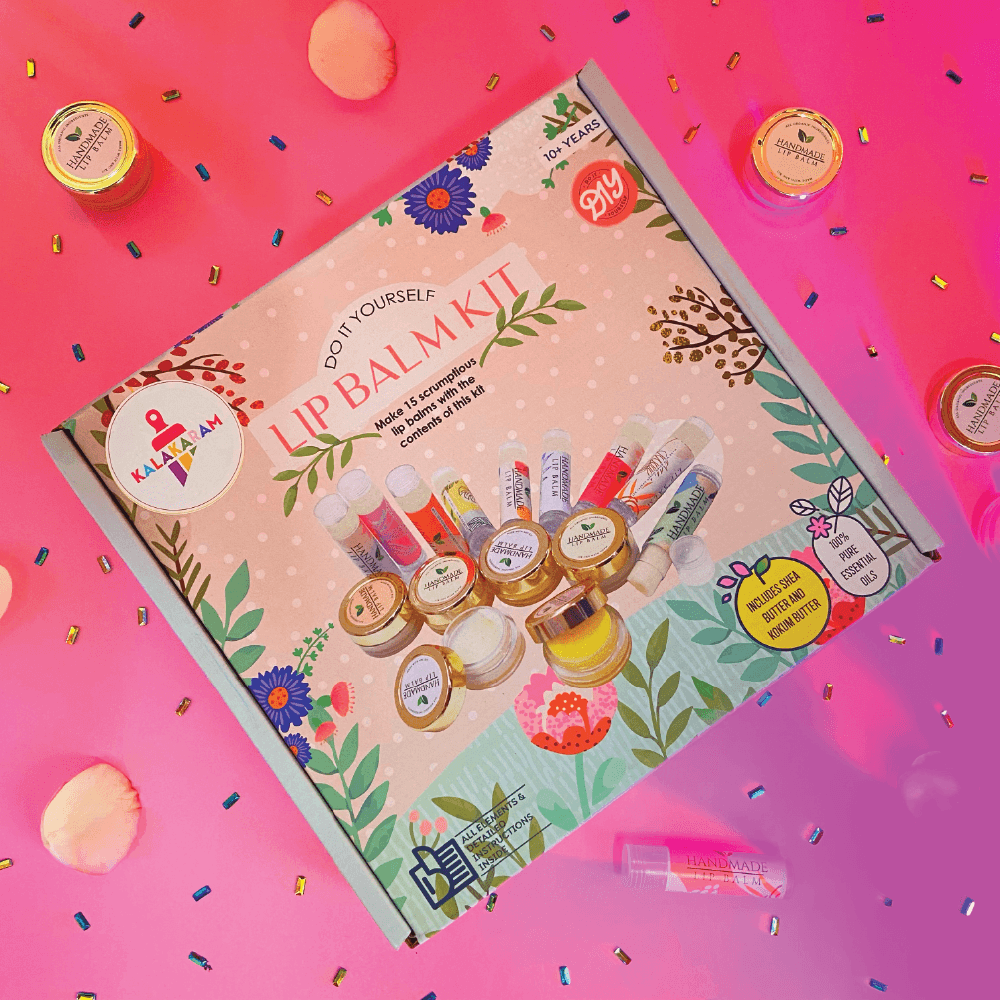
Picture this: your 8-year-old is hunched over a craft table, completely absorbed in creating intricate embroidery patterns or mixing natural ingredients for homemade lip balm. An hour passes unnoticed. They're not just playing – they're literally building their brain. Recent neuroscience research reveals that hands-on creative activities trigger remarkable changes in children's developing minds, strengthening neural pathways that will serve them throughout their lives.
Understanding the Creative Brain
The human brain doesn't have a single "creativity center." Instead, creativity emerges from complex interactions between multiple brain regions. When children engage in DIY projects, they simultaneously activate areas responsible for planning, problem-solving, sensory processing, and emotional regulation. This whole-brain engagement creates stronger, more flexible neural networks.
Dr. Michael Gazzaniga, a pioneer in cognitive neuroscience, describes creative activities as "cognitive cross-training." Just as athletes benefit from varied physical exercises, children's brains benefit from activities that challenge multiple mental systems simultaneously.
The Neuroplasticity Advantage
Children's brains possess extraordinary plasticity – the ability to form new neural connections throughout life. This plasticity peaks during childhood, making these years crucial for brain development. Creative activities leverage this plasticity more effectively than passive learning methods.
When a child figures out how to create the perfect candle color combination or discovers the right embroidery tension for smooth stitches, they're not just learning techniques – they're building neural pathways that strengthen their capacity for future learning and problem-solving.
What Happens During Hands-On Creation
The Planning Phase
Before children begin a project, their prefrontal cortex – the brain's executive center – springs into action. They must visualize the end result, plan steps, and anticipate challenges. This planning process strengthens the same neural circuits responsible for academic success and life management skills.
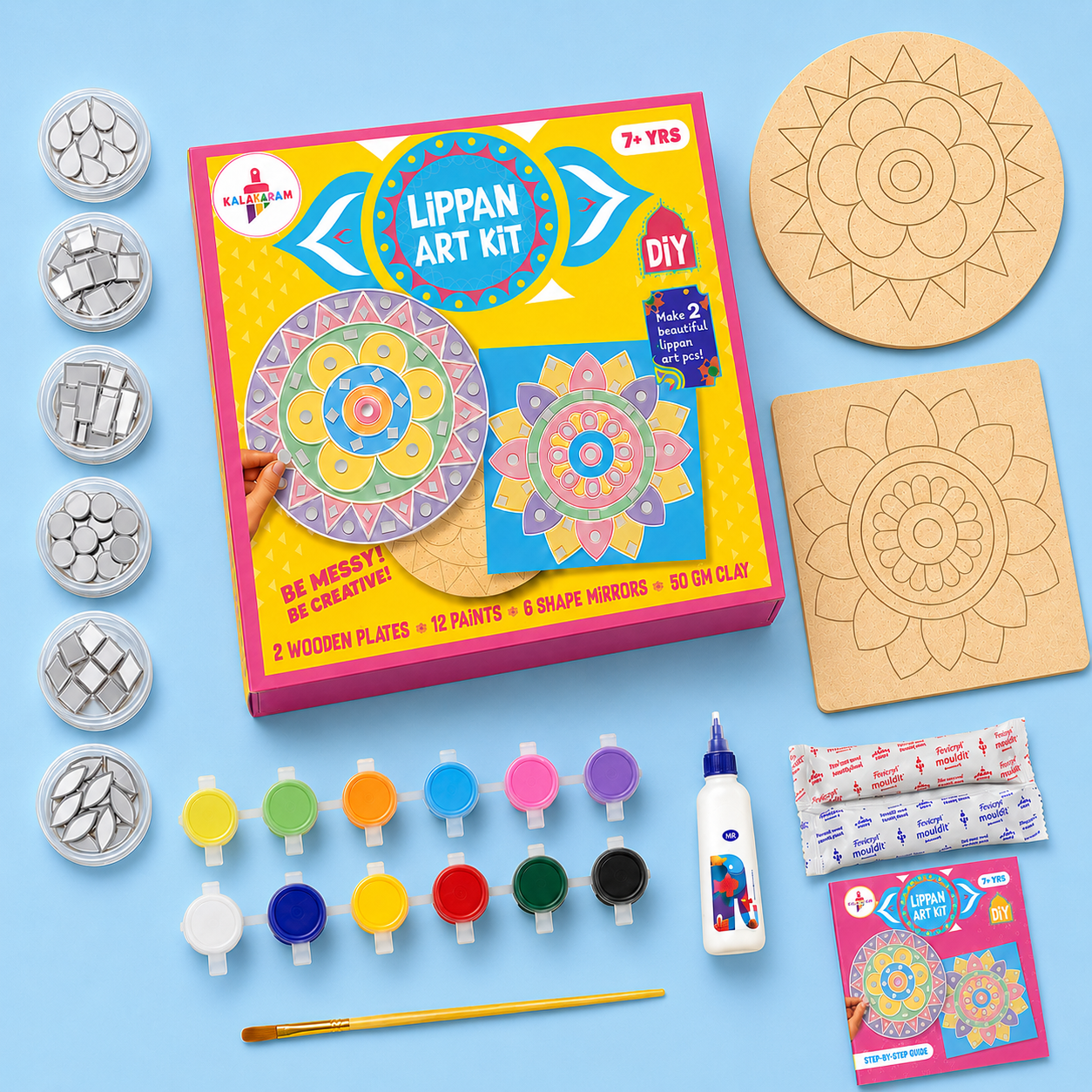
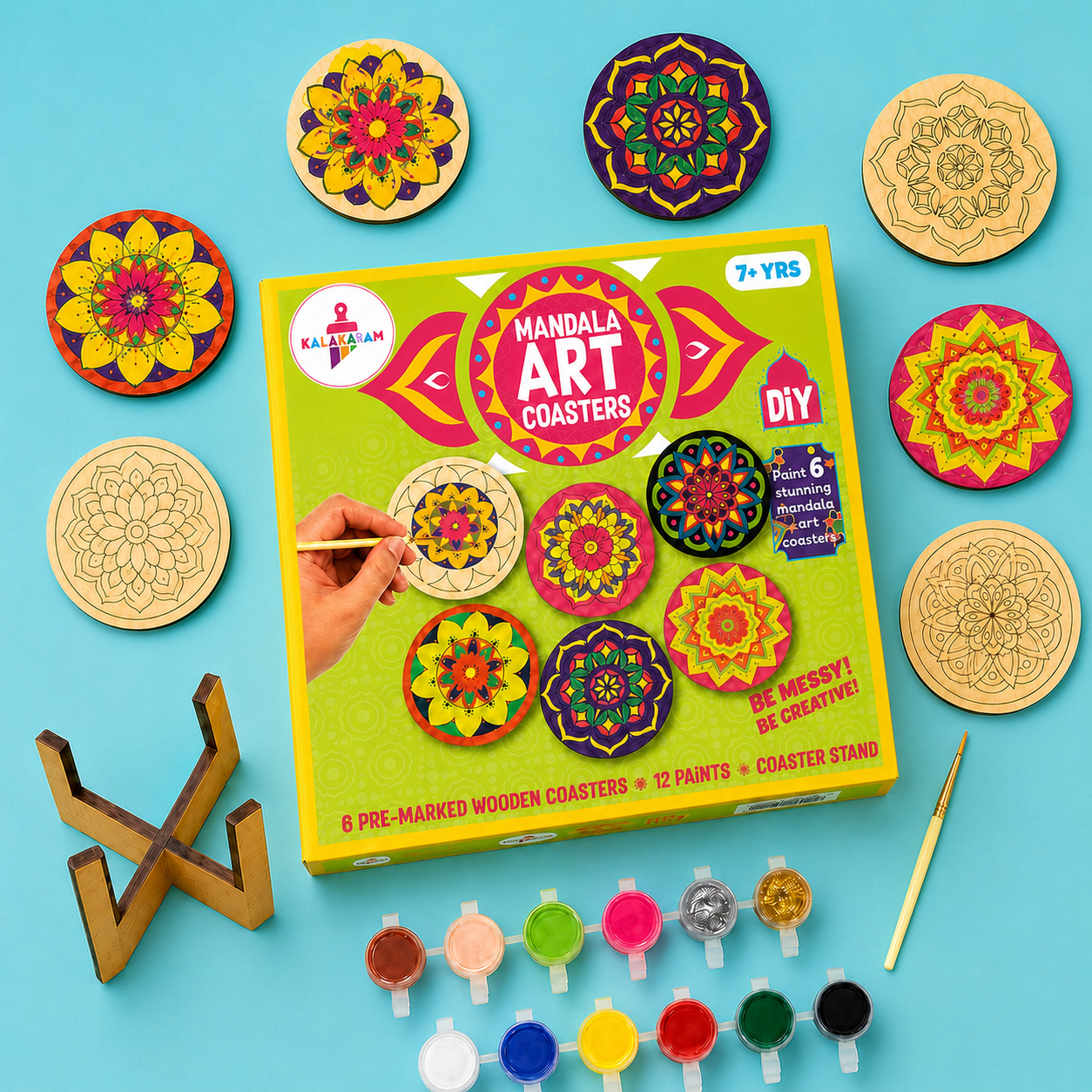
Kalakaram Example: When working with our Indian Ethnic Art Kits, children must plan color combinations, understand pattern sequences, and visualize the final traditional design. This complex planning strengthens executive function significantly.
https://kalakaram.com/collections/ethnic-art-kits
Research from Stanford University shows that children who regularly engage in planning-heavy activities, like complex craft projects, demonstrate improved performance on standardized tests measuring executive function.
The Problem-Solving Process
Every DIY project presents mini-challenges: How do I make this embroidery stitch consistent? Why isn't my candle wax setting properly? What if I try a different fragrance combination? Each problem-solving moment strengthens the brain's cognitive flexibility – the ability to adapt thinking when circumstances change.
Kalakaram Example: Our Candle Making Kits present multiple problem-solving opportunities. Children must understand temperature control, color mixing ratios, and scent combinations. When something doesn't work as expected, they develop resilience and innovative thinking patterns.
https://kalakaram.com/collections/candle-making-kits-ri
Unlike academic problems with predetermined solutions, creative challenges often have multiple viable answers. This open-ended problem-solving builds tolerance for ambiguity and strengthens innovative thinking patterns.
The Motor-Cognitive Connection
Cutting, stitching, mixing, and assembling aren't just physical activities – they're brain-building exercises. The motor cortex, which controls movement, maintains extensive connections with areas responsible for language, mathematics, and executive function.
Kalakaram Example: Working with our Embroidery Kits strengthens motor-cognitive connections through precise needle work, pattern following, and tension control. These fine motor activities enhance handwriting, mathematical understanding, and reading comprehension.
https://kalakaram.com/collections/buy-embroidery-kits
When children manipulate materials with their hands, they strengthen these motor-cognitive connections. This explains why children who engage in regular hands-on activities often show improvements in handwriting, mathematical understanding, and reading comprehension.
Memory Formation and Retention
The Multi-Sensory Advantage
Creative projects engage multiple senses simultaneously. Children see colors and patterns, feel textures and materials, hear sounds as tools interact with surfaces, and sometimes smell natural fragrances or materials. This multi-sensory input creates richer, more durable memories.
Kalakaram Example: Our Bath & Beauty Kits provide rich sensory experiences. Children see color changes as ingredients mix, feel different textures, smell natural fragrances, and experience the satisfaction of creating useful products. This multi-sensory engagement enhances memory formation and skill retention.
https://kalakaram.com/collections/buy-bath-beauty-kits
The hippocampus, the brain's primary memory center, processes multi-sensory information more effectively than single-sense input. This is why children remember how to recreate techniques from our kits weeks later, even if they can't recall information they read the same day.
Emotional Memory Enhancement
Creative activities often generate positive emotions – satisfaction, surprise, joy, pride. The amygdala, which processes emotions, works closely with memory centers to strengthen recall of emotionally significant events.
Kalakaram Example: The pride children feel when completing projects from our Kids Activity Kits creates strong emotional memories associated with learning and creating. These positive associations encourage continued exploration and skill development.
https://kalakaram.com/collections/kids-activity-kit
When children feel good while learning, they're more likely to remember both the specific content and the positive associations with learning itself. This emotional memory component helps create lifelong learners.
The Focus and Attention Benefits
Flow State Achievement
Psychologist Mihaly Csikszentmihalyi identified "flow" as a state of complete absorption in challenging, skill-appropriate activities. Children often achieve flow during hands-on projects, experiencing deep focus and intrinsic motivation.
Kalakaram Example: Our Mini Kits are perfectly designed to create flow states. The projects are challenging enough to engage attention but achievable enough to maintain confidence, creating ideal conditions for deep focus and sustained engagement.
https://kalakaram.com/collections/buy-minis
During flow states, the brain releases neurotransmitters including dopamine, norepinephrine, and endorphins. These chemicals enhance focus, pattern recognition, and creative thinking while creating positive associations with challenging activities.
Attention Training
In our distraction-rich environment, sustained attention has become increasingly rare. Creative projects naturally train attention skills. Unlike screen-based activities that provide constant stimulation, hands-on projects require sustained, self-directed focus.
Children who regularly engage in attention-demanding creative activities show improved performance on attention-related tasks and reduced symptoms of attention difficulties.
Social Brain Development
Mirror Neuron Activation
When children work on creative projects with others, they activate mirror neuron systems – brain circuits that help understand others' intentions and emotions. Watching a sibling struggle with embroidery tension or celebrate a successful candle creation helps children develop empathy and social understanding.
Kalakaram Example: Our larger Family Activity Kits encourage collaborative creation, activating mirror neuron systems as family members observe, help, and learn from each other's techniques and approaches.
https://kalakaram.com/collections/buy-theme-craft-kits
This social brain development through creative collaboration builds skills essential for teamwork, leadership, and emotional intelligence.
Communication Circuit Strengthening
Explaining their process, asking for help, or teaching others techniques exercises language centers in unique ways. Unlike rote verbal practice, creative communication involves translating spatial and motor experiences into words, strengthening connections between different brain regions.
Executive Function Development
Working Memory Enhancement
Hands-on projects require children to hold multiple pieces of information in mind simultaneously: the overall goal, current step, available materials, and potential next moves. This constant juggling strengthens working memory – a core component of executive function.
Kalakaram Example: When working with our Traditional Art Kits, children must remember color mixing ratios, pattern sequences, traditional techniques, and their personal creative vision simultaneously. This complex mental juggling significantly strengthens working memory capacity.
https://kalakaram.com/collections/buy-theme-craft-kits
Improved working memory supports academic performance across subjects, from multi-step math problems to reading comprehension passages.
Inhibitory Control Building
Creative projects often require children to resist impulses: waiting for paint to dry, following traditional techniques precisely, or saving favorite materials for specific project elements. These experiences strengthen inhibitory control – the ability to override immediate impulses in service of larger goals.
Strong inhibitory control correlates with academic success, social competence, and mental health throughout life.
The Innovation Mindset
Divergent Thinking Development
Traditional education often emphasizes convergent thinking – finding the single correct answer. Creative activities promote divergent thinking – generating multiple solutions to open-ended problems.
Kalakaram Example: Our Creative Exploration Kits present open-ended challenges where children can approach projects in multiple ways. There's no single "correct" method for creating beautiful embroidery or mixing perfect candle scents, encouraging innovative thinking.
https://kalakaram.com/collections/artistic-expression
Brain imaging studies show that divergent thinking activates both logical and creative brain networks simultaneously, building mental flexibility that serves children throughout their lives.
Risk-Taking and Resilience
Creative projects inherently involve uncertainty and the possibility of "failure." When children learn to view unsuccessful attempts as learning opportunities rather than failures, they develop resilience and willingness to take appropriate risks.
This growth mindset, supported by neuroplastic changes in the brain, helps children approach challenges with curiosity rather than fear.
Practical Brain-Building Applications
Cultural Learning and Neural Development
Kalakaram's Indian Ethnic Art Kits provide unique brain-building benefits by connecting children to cultural heritage while developing artistic skills. Learning traditional techniques activates areas responsible for cultural understanding, pattern recognition, and fine motor control simultaneously.
The complexity of traditional Indian art forms provides ideal challenge levels for developing brains, requiring sustained attention, cultural appreciation, and technical skill development.
Scientific Thinking Through Creation
Bath & Beauty Kits naturally incorporate scientific thinking as children experiment with ingredient combinations, observe chemical reactions, and test different formulations. This hands-on chemistry builds scientific reasoning skills while creating practical, usable products.
Children learn hypothesis formation, experimental design, and result analysis through enjoyable creative processes that feel more like play than formal science education.
Mathematical Concepts Through Craft
Embroidery and Candle Making Kits require precise measurements, ratio understanding, and geometric awareness. Children develop mathematical thinking naturally as they calculate thread lengths, mix color proportions, and create geometric patterns.
These mathematical applications feel meaningful and practical, helping children understand why mathematical skills matter in real-world applications.
Optimizing Brain Development
Age-Appropriate Challenge Levels
The brain benefits most from activities that are challenging but achievable. Kalakaram's age-specific recommendations ensure children experience optimal challenge levels that promote growth without causing frustration.
Ages 4-6: Focus on sensory exploration and basic skill development with our Beginner Mini Kits Ages 7-10: Introduce complex techniques with our Intermediate Activity Kits
Ages 11-14: Offer sophisticated projects with our Advanced Traditional Art Collections
Regular Practice Effects
Neuroplasticity requires repetition. Occasional creative activities provide some benefits, but regular engagement creates lasting brain changes. Even 30 minutes with Kalakaram kits several times per week can strengthen neural networks significantly.
Documentation and Reflection
Encouraging children to talk about their process, challenges, and discoveries strengthens the verbal-spatial connections in their brains. Keep a simple portfolio where children can reflect on their creative experiences and track skill development over time.
The Long-Term Brain Benefits
Children who regularly engage with Kalakaram's hands-on creative kits show sustained advantages in:
-
Cognitive flexibility: Adapting thinking when circumstances change
-
Problem-solving creativity: Finding innovative solutions to challenges
-
Emotional regulation: Managing stress and setbacks effectively
-
Social competence: Understanding and collaborating with others
-
Academic performance: Applying enhanced executive function to school tasks
-
Cultural appreciation: Understanding heritage and traditional knowledge
These benefits compound over time, creating adults who approach challenges with confidence, creativity, and resilience.
Starting the Brain-Building Journey
You don't need expensive equipment or complex setups to begin building your child's brain through creativity. Kalakaram's carefully designed kits provide everything needed for powerful brain-building experiences, from traditional art forms that connect children to cultural heritage to modern applications like natural product creation.
The key is consistency and allowing children to direct their own exploration within supportive frameworks. When we trust children's natural curiosity and provide appropriate materials and encouragement through quality DIY kits, their brains respond by building stronger, more flexible neural networks.
Every time your child engages deeply with a Kalakaram project, remember that you're watching brain development in action. Those moments of focused concentration, creative problem-solving, and satisfied accomplishment are literally shaping their neural architecture for life.
Conclusion
The science is clear: children's brains are designed to learn through hands-on exploration and creation. Kalakaram's DIY kits leverage this natural learning preference, providing structured creative experiences that build neural pathways supporting lifelong learning, innovation, and well-being.
From the complex planning required for traditional art projects to the scientific thinking involved in natural product creation, each kit offers multiple layers of brain-building benefits wrapped in engaging, culturally rich activities.
By providing regular opportunities for creative play through quality DIY kits, we give our children the best possible foundation for cognitive development, academic success, and creative fulfillment throughout their lives.
FAQs
Q: At what age do children start benefiting from Kalakaram's DIY kits? A: Brain benefits begin as early as age 4 with our simplified Mini Kits. However, the most significant neuroplastic changes occur between ages 6-12 when children can engage with our full range of activities.
Q: How long should creative sessions be for optimal brain development? A: Quality matters more than quantity. Even 20-30 minutes of focused engagement with our kits provides brain benefits. Follow your child's natural attention span and interest level.
Q: Do traditional art forms provide different brain benefits than modern crafts? A: Yes, traditional techniques like those in our Indian Ethnic Art Kits activate areas responsible for cultural learning and heritage connection alongside standard creative brain regions, providing unique cognitive benefits.
Q: Can Kalakaram kits help children with learning differences? A: Many children with learning differences benefit from our multi-sensory, hands-on approach. The kits often provide alternative pathways for learning and can help children access knowledge through creative expression.
Q: How can I tell if my child is getting brain-building benefits from the activities? A: Look for increased focus, willingness to try new challenges, improved problem-solving in daily situations, and growing confidence in tackling complex tasks. These indicate strengthening neural pathways.